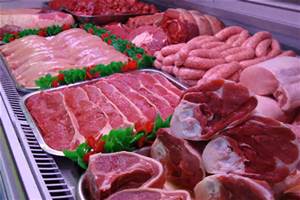
 With my dietary restrictions, I can never go vegan. It’s just a fact. That being said, all meats are not the same, and I can’t eat some of them. Sometimes I pass through the deli aisle and fondly remember the taste of all those meats. Let’s discuss what to look for if you are like me, a “sensitive eater”.
Beef
A cow is a cow, right? Not necessarily! Something I never thought of before starting this diet was the what the cows were eating. If you have a sensitivity to corn, as I do, you should stay away from grain-fed beef. Logical, I know, but it took me years to figure that out! When I was out eating a hamburger and got a reaction, I always assumed the restaurant had put fillers in the burger. I never thought it was because the cow ate corn! (Sometimes I’m slow to get things! 😉 ) It wasn’t until I really started noticing the correlation between cooking beef at home and my sensitive tummy reacting that it hit me. People had told me for years about “grass-fed beef”, and honestly, I just figured it was one of those gimmicks to get you to spend more money on beef. Until one day, when I “splurged” and bought a pound of it. Oh my! Not only was the taste FAR superior than the other, but I had ZERO reaction to it!! (insert angelic choir music here) The price was definitely worth it, and now that it’s more readily available, the price has come down.
Several of my friends actually chip in together and buy “a whole cow”. There are ranches that sell their beef to you in bulk. Here’s one that serves Nevada –Alpine Ranch. I’m sure there are ranches in your area – check them out and post the info here for other folks. (My blog is read by people all over the world, so feel free to post even if you aren’t in the U.S. ) 🙂
Because grass-fed cattle are leaner, it means the meat is less fatty than corn-fed cows. Below are some of the other benefits associated with grass-fed vs. corn-fed:
- Higher in beta-carotene
- Higher in vitamin E (alpha-tocopherol)
- Higher in the B-vitamins thiamin and riboflavin
- Higher in the minerals calcium, magnesium, and potassium
- Higher in total omega-3s
- Better ratio of omega-6 to 3 fatty acids (1.65 vs 4.84)
- Higher in CLA (cis-9 trans-11), a potential cancer fighter
- Higher in vaccenic acid (which can be transformed into CLA)
- Lower in the saturated fats linked with heart disease
Bacon!!!!
When I first started this journey, I was saddened to learn that I couldn’t have bacon. Most bacon is cured with sugar. Even the Honey Smoked Bacon has sugar instead of actual honey! 😦 You should have heard me complain to the Whole Foods Meat guy! In the last couple of years however, companies started coming out with “Low Sodium” Bacon. I don’t have a problem with sodium (actually I don’t get enough!), but being an avid label reader, I picked up a package. Pleasantly surprising!! Not only was it low sodium, but it contained NO SUGAR!!! Look! 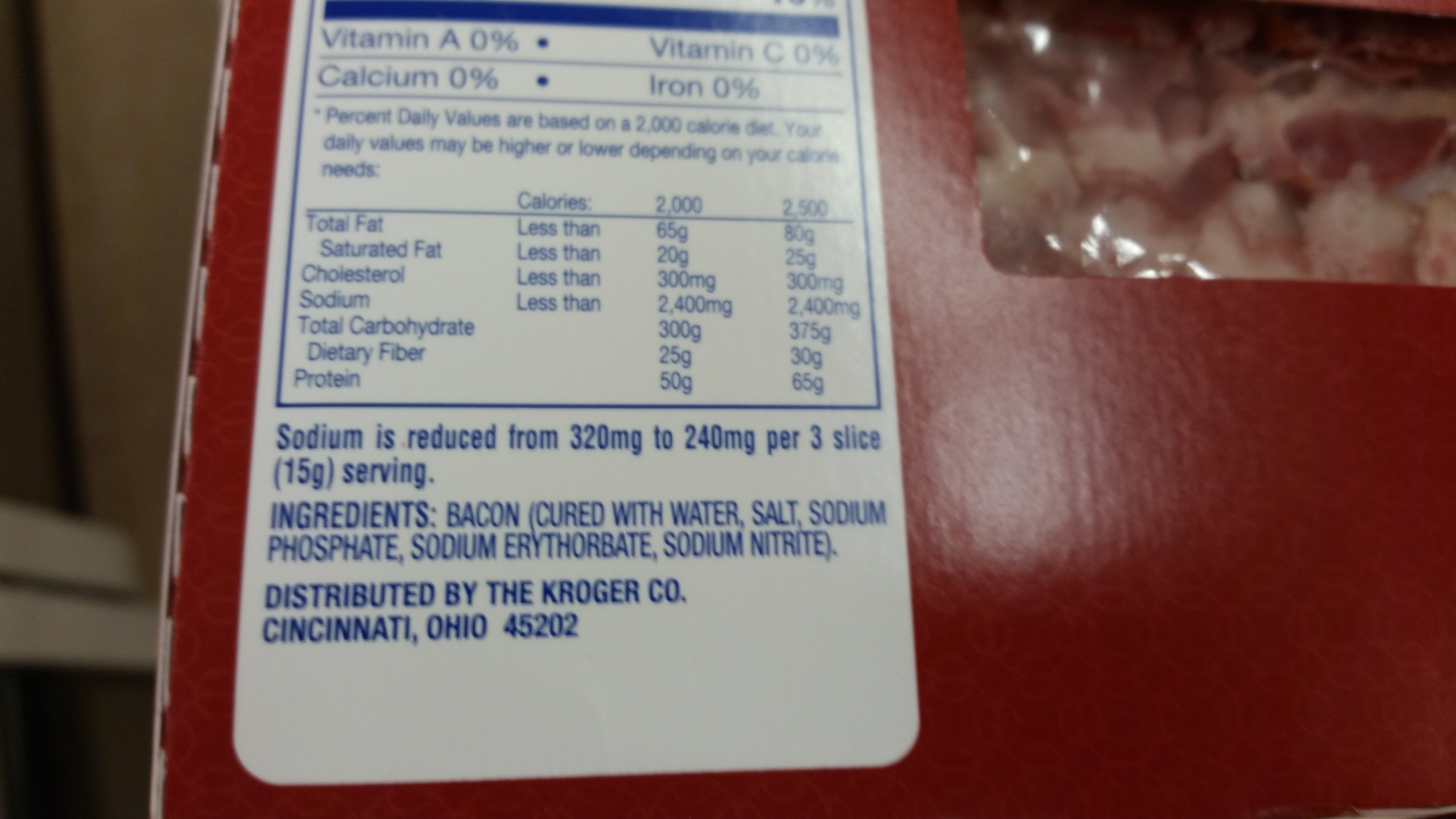 Yay!! So, when I’m jones-ing for some bacon, I can just run down to the store! Even though I can have it, I don’t eat much of it because it’s got a bunch of things in it that I can barely pronounce.
For those who are interested in buying pork in bulk, Alpine Ranch also raises pasture pigs, who are humanely raised and fed an all natural, vegetarian diet. The cattle and pigs are not administered growth hormones, stimulants, or growth promoting antibiotics. 🙂
Ok, that’s enough for today, I don’t want you to get overloaded on meat products, but stay tuned! I’ll post another blog in a day or two with some more great meat facts, and where to buy them!
Thanks for stopping by! 🙂
 The Sensitive Eater